You tell yourself it will be one last look, a message, the weather, tomorrow's calendar, maybe one short video. Then half an hour disappears. If you want to learn how to stop checking your phone before bed, it helps to stop treating it like a simple self-control problem. Late-night phone checking usually happens when your brain is tired, under-stimulated, emotionally full, or all three.
That matters because the cost is not only lost time. A later bedtime often means less sleep, and most adults need at least 7 hours of sleep for mood, concentration, and physical health. The good news is that you do not need a dramatic digital detox to change this pattern. You need a few targeted shifts that make the bedtime scroll less rewarding and the alternative easier to follow. This article covers why the habit sticks, what your brain may actually be seeking, and how to build a night routine that feels realistic on ordinary, messy days.
Why the habit feels so hard to break?
At night, your brain is usually not looking for productivity. It is looking for relief, novelty, or a softer landing after a long day. Phones deliver all three with almost no effort. Every refresh carries the possibility of something new, useful, funny, reassuring, or distracting. That pattern of uncertain reward is powerful, especially when you are already depleted.
There is also a quieter issue beneath the habit: bedtime can feel emotionally loud. The moment you stop moving, thoughts rush in. Plans. Regrets. Unanswered messages. Small embarrassments. Money worries. A phone can become a way to postpone that internal noise for a little longer. So when people ask how to stop checking your phone before bed, the real question is often how to tolerate the transition from busy to still. That transition matters because mental arousal delays sleep just as much as a late bedtime does, and sleep deprivation can make mood, focus, and impulse control worse the next day.
What your brain is getting from the scroll?
If you want a solution that lasts, identify the payoff. The scroll is usually providing one of four things: distraction, connection, stimulation, or avoidance. A person who scrolls because they feel lonely at night needs something different from a person who scrolls because their mind will not stop planning tomorrow.
Start your mental wellness journey today
Join thousands using Ube to manage stress, improve focus, and build lasting healthy habits.
This is why harsh rules often fail. If you remove the phone without replacing what it was doing for you, your brain keeps searching for the missing function. Ask yourself, What am I trying not to feel right now? Tension, boredom, sadness, uncertainty, and racing thoughts are common answers. If the pattern feels tied to worry, it can help to understand the basics of anxiety symptoms and how they show up in the body at night. And if you need a gentler replacement for the urge to reach, these mindfulness exercises for beginners that actually stick can give your attention somewhere safer to land.
Build a shutdown ritual you can actually follow
The most effective plan is usually small and repeatable, not strict and dramatic. Instead of trying to become a different person at 10:30 p.m., create a short shutdown sequence that tells your brain the day is over. The aim is to make bedtime feel guided, not empty.
Try this simple four-step reset for one week:
Pick a realistic last-check time, usually 20 to 30 minutes before sleep.
Decide where the phone goes after that, ideally out of arm's reach.
Replace the scroll with one low-effort activity, such as stretching, reading a few pages, or writing tomorrow's top task on paper.
Use the same cue each night, like dimming the lights or brushing your teeth, so the routine starts automatically.
What makes this work is not perfection. It is predictability. A repeated sequence lowers decision fatigue, which is often the hidden problem at night. If you are building from scratch, a short bedtime wind-down routine that sticks can help you connect the phone cut-off to something calming rather than just something you are not allowed to do.
Make the bedroom easier on your willpower
Environment usually beats intention. If your phone is glowing on the pillow beside you, your future self has to win the same argument every night. That is exhausting. A better approach is to add friction to the habit you want less of and reduce friction for the habit you want more of.
Put the charger across the room, on a dresser, or outside the bedroom if that is possible. Turn off nonessential alerts after your cut-off time. Leave a paper book, notebook, or glass of water where your hand normally reaches. These are small changes, but they matter because they interrupt automatic behavior. You are not trying to prove discipline. You are designing the room so the easy choice is the better choice.
If sleep still feels hard even when you are off the phone, pay attention to whether something deeper is going on. Trouble falling asleep, frequent waking, loud snoring, or daytime exhaustion may deserve a closer look, and sleep disorders are more common than many people realize. A phone habit can be part of the problem without being the whole problem.
What to do when the urge hits anyway?
Even with a solid plan, there will be nights when the urge feels sharp. This is where people often assume they have failed. They have not. An urge is not a command. It is a wave. Most urges rise, peak, and soften if you do not immediately obey them. Try saying to yourself, I want to check my phone, but I do not need to check it right now. Then wait two minutes. Often that brief pause is enough to loosen the grip.
It also helps to give the urge a job. If your hand reaches for the phone because your thoughts are speeding up, redirect into something equally simple: three slow breaths, one paragraph of reading, or writing down the thought you are afraid to forget. This is not about being perfectly offline. It is about shortening the spiral. Recovery matters more than streaks. If you do check, stop after one look, put the phone back, and resume the routine. A partial reset still protects sleep better than giving the rest of the night away.
A calmer end to the day
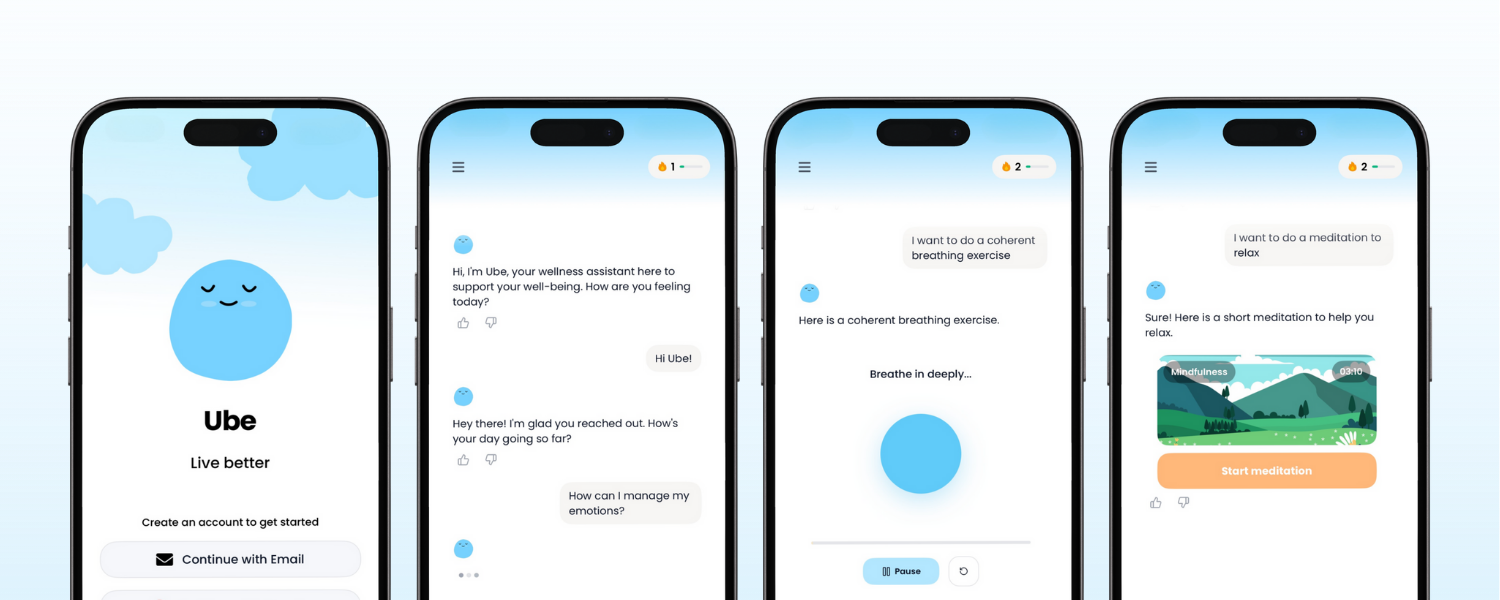
Learning how to stop checking your phone before bed is less about force and more about understanding the moment you are in. When the scroll is meeting a need, whether that need is distraction, soothing, or escape, you change the habit by meeting the need in a quieter way. Make the phone a little less convenient, make your replacement a little more inviting, and expect some imperfect nights while the new pattern settles. Gentle consistency works better than shame, and a bedtime routine does not have to look impressive to be effective. If you want extra support on tense evenings, Ube offers gentle AI-guided breathing, coherence, and meditation exercises that may help you unwind.
FAQ
Why do I keep checking my phone before bed even when I am tired?
Because tired brains often choose relief over rules. Scrolling offers novelty, distraction, and a small sense of control, so it can feel soothing even when it pushes sleep later.
How to stop checking your phone before bed if you use it as an alarm?
Keep the phone across the room, turn off nonessential alerts, and switch to a simple alarm screen before your cut-off time. That keeps the function you need without easy access to scrolling.
Can how to stop checking your phone before bed really improve sleep?
Often, yes. Reducing late-night checking lowers stimulation, shortens bedtime delay, and helps your brain settle more easily, especially when you pair it with a consistent wind-down routine.
What should I do instead of scrolling at night?
Choose a replacement that matches the need: a paper book for distraction, light stretching for tension, journaling for mental clutter, or a few minutes of slow breathing for anxiety.