When you search for "Duolingo for mental health", you're probably asking: Can we apply the same addictive, streak-based learning model that made language apps successful to improving our emotional wellbeing?
The short answer is yes, and it's already happening.
According to the World Health Organization, mental health conditions affect 1 in 8 people globally. Yet traditional mental health resources remain inaccessible, expensive, or intimidating for most young adults. This gap has created demand for a new category: gamified mental wellness apps that make emotional health feel as approachable as learning Spanish.
This article explores why the Duolingo for mental health model works, what makes it different from traditional therapy apps, and how platforms like Ube are pioneering this space.
What makes Duolingo so effective?
To understand why Duolingo for mental health is a powerful concept, we first need to unpack what makes Duolingo itself addictive:
1. Microlearning and bite-sized habits
Duolingo breaks language learning into 5-minute sessions. You don't need to commit an hour a day. Just show up briefly, consistently.
2. Streak mechanics that create accountability
The green owl doesn't judge you, but your streak counter does. Missing a day feels like breaking a promise to yourself.
3. Gamification with purpose
XP, levels, leagues, every element exists to make progress visible and rewarding without diminishing the core goal: actually learning a language.
4. Positive reinforcement over punishment
Duolingo celebrates your wins more than it punishes your failures. This approach builds intrinsic motivation, the kind that lasts.
Research from behavioral science studies shows that apps using these mechanics see 3-5x higher retention rates than traditional educational platforms.
Now imagine applying these same principles to your mental health.
Why mental health apps need gamification
Traditional mental health apps fall into two camps:
Clinical therapy platforms: Think BetterHelp or Talkspace. They connect you with licensed therapists but require significant time and financial commitment.
Start your mental wellness journey today
Join thousands using Ube to manage stress, improve focus, and build lasting healthy habits.
Passive meditation apps: Calm, Headspace, and similar apps offer guided meditations but lack personalization or interactivity.
Both have their place, but neither solves the fundamental problem: most people don't stick with them.
According to research published in Nature Digital Medicine, the average mental health app sees 85% of users drop off within the first week. This isn't because people don't care about their mental health. It's because these apps fail to create sustainable habits.
Enter the Duolingo for mental health model.
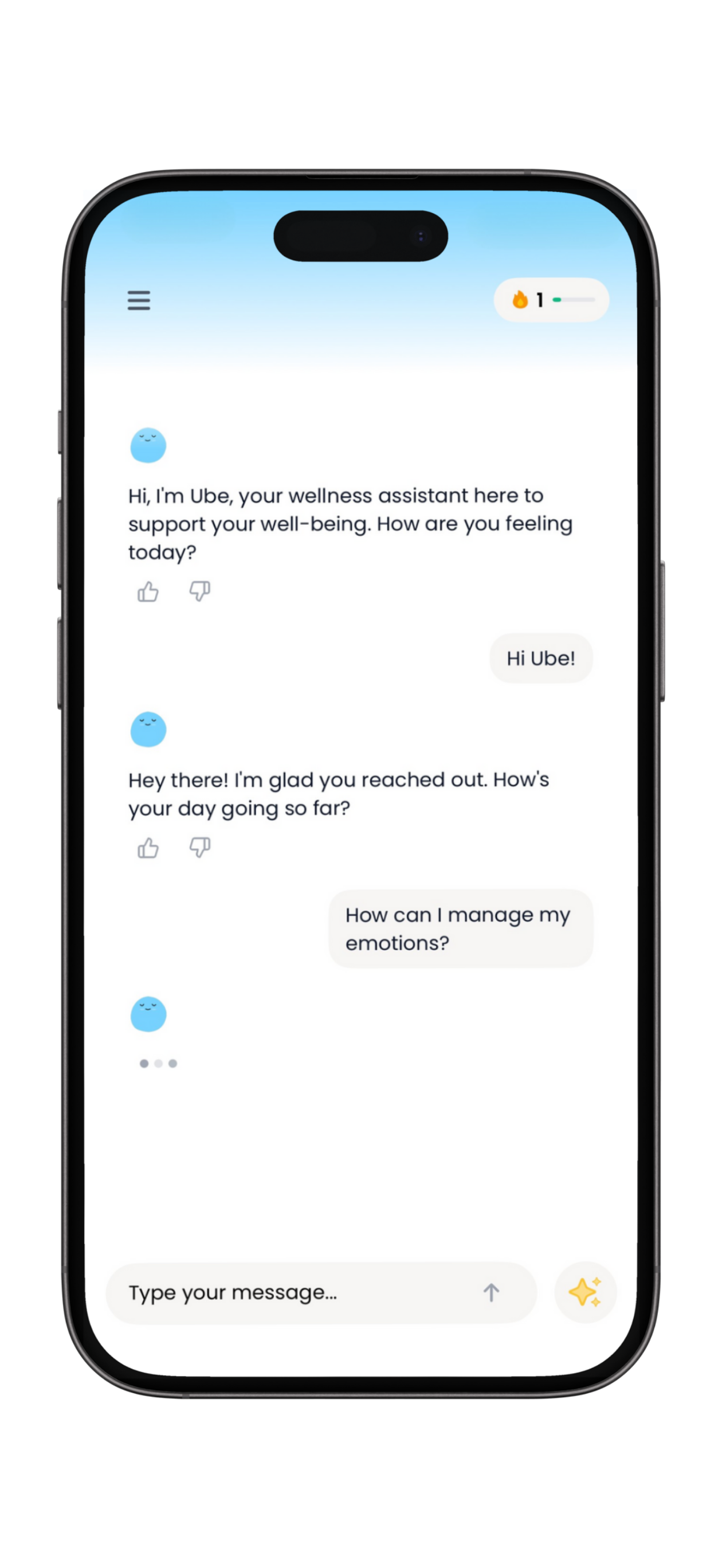
The screenshot above shows how gamified mental health apps transform passive consumption into active participation. You're not just listening to a meditation track and forgetting about it. You're earning XP, tracking streaks, and experiencing visible progress.
The psychology of gamified wellness
Why does turning mental health into a "game" actually work? Isn't that trivializing something serious?
Not if done thoughtfully.
Gamification taps into several psychological principles:
Progress visualization
Humans are motivated by seeing growth. When your anxiety journal is just a blank page, it's hard to feel progress. When you see "Level 8 - 47 days tracked", that's tangible evidence of effort.
Loss aversion
We're more motivated to avoid losing something we've earned than to gain something new. A 23-day streak feels valuable. Breaking it feels like loss. This nudges consistency without being manipulative.
Immediate feedback loops
Traditional therapy gives you feedback weekly. A Duolingo for mental health app gives you feedback instantly. Complete a breathing exercise, earn XP. That dopamine hit reinforces the behavior.
The key difference between good gamification and manipulative design is intentionality. Apps like Ube use streaks and rewards to support genuine wellness habits, not to maximize screen time or ad revenue.
What a Duolingo for mental health app actually looks like
So what features define this category? Based on emerging apps in this space, here are the core components:
Daily streaks and check-ins
Just like Duolingo, you're encouraged to show up every day. But instead of learning verb conjugations, you're checking in with your emotions, completing a quick breathing exercise, or journaling a gratitude moment.
XP and level progression
Every interaction earns experience points. Send a message to your AI companion, gain XP. Complete a meditation? More XP. Level up and unlock new badges or milestones.
Personalized AI conversations
Unlike static meditation tracks, modern Duolingo for mental health apps use AI that remembers context. The conversation flows naturally. The AI knows if you mentioned work stress yesterday or if you've been struggling with sleep.
This screenshot shows how conversational AI makes mental wellness feel less like "doing homework" and more like talking to a supportive friend who actually remembers your life.
Science-backed exercises made accessible
Box breathing, progressive muscle relaxation, cognitive reframing, these aren't new techniques. What's new is packaging them in a format that feels modern, quick, and rewarding.
The Duolingo for mental health model resonates particularly with people aged 18-35 because:
Mobile-first habits: This generation lives on their phones. A mental health solution needs to meet them there.
Gamification fluidity: They grew up with video games, achievement systems, and social media feedback loops. Gamified wellness feels native.
Mental health awareness: Unlike previous generations, young adults are more open about mental health struggles and actively seek tools to manage stress and anxiety.
Affordability concerns: Traditional therapy costs $100-300 per session. A Duolingo for mental health app offers accessible pricing (often free tiers + premium subscriptions).
This demographic doesn't want another clinical tool. They want something that blends into their digital lifestyle while genuinely helping them feel better.
How Ube embodies the Duolingo for mental health vision
Ube was built specifically with this philosophy in mind: mental wellness should be approachable, habit-forming, and genuinely effective.
Here's how Ube applies the Duolingo model:
Conversational AI that adapts to you
Instead of generic meditation scripts, Ube's AI companion remembers your conversations, understands your unique stressors, and suggests personalized exercises. It's like having a therapist who's available 24/7 without the $200/hour price tag.
Streaks that motivate without guilt
Ube tracks your daily engagement. Send a message, complete an exercise, your streak grows. But unlike manipulative apps, Ube doesn't spam you with notifications or make you feel bad for missing a day.
Wellness activities in under 5 minutes
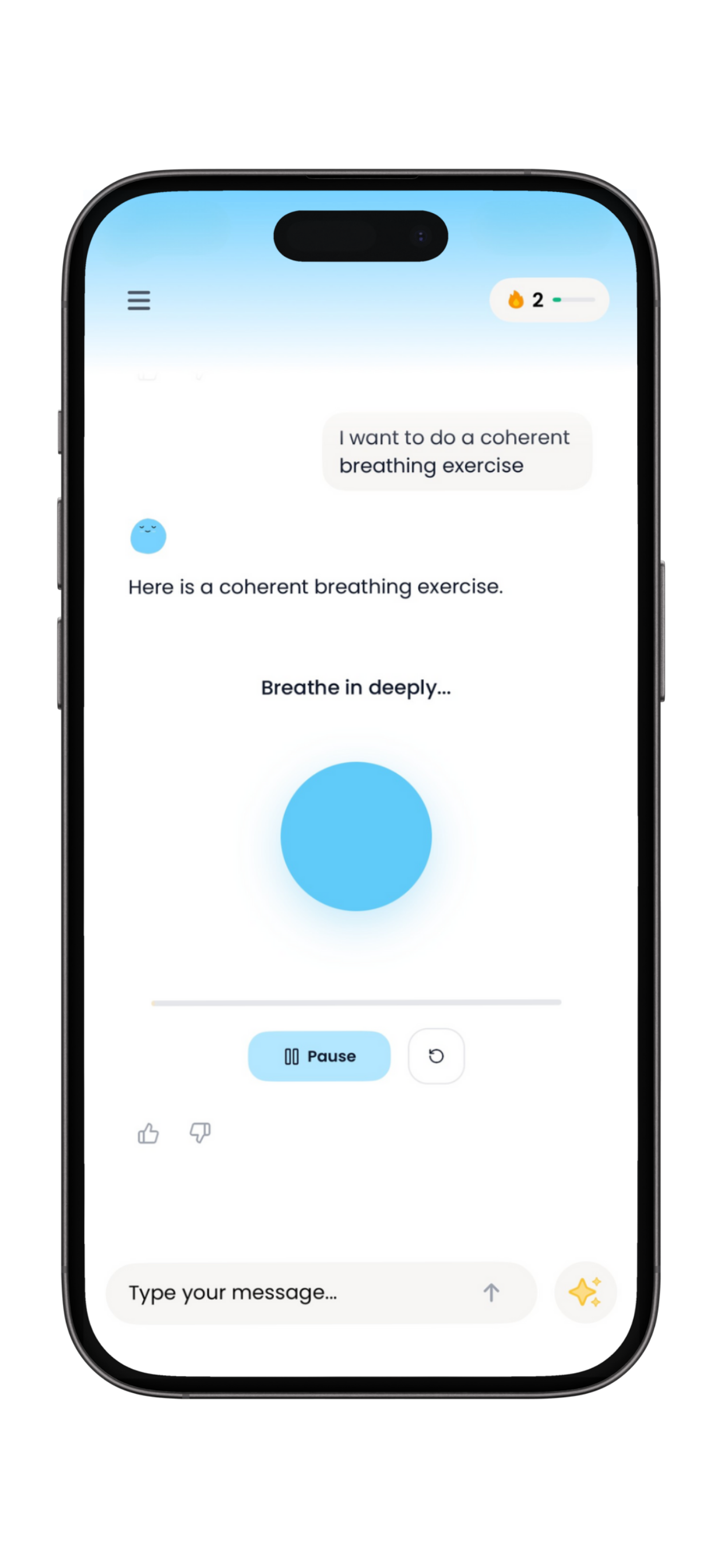
Box breathing takes 90 seconds. Coherence breathing takes 3 minutes. A quick guided meditation takes 5 minutes. These aren't hour-long commitments, they're micro-habits that fit into your commute, lunch break, or bedtime routine.
XP, levels, and badges that visualize progress
Every action earns you experience points. Hit milestones and unlock achievement badges. It sounds simple, but this mechanic transforms "managing mental health" from an abstract goal into a visible, trackable journey.
Ube isn't trying to replace professional therapy. It's offering a complementary tool that makes daily mental wellness feel as natural as scrolling social media, except it actually leaves you feeling better.
The difference between helpful gamification and exploitation
A valid criticism of Duolingo for mental health apps is: Are we turning genuine mental health struggles into a game?
The answer depends on design philosophy.
Ethical gamification:
Uses streaks to encourage consistency, not to guilt users
Rewards real progress like completing exercises or meaningful check-ins
Respects user autonomy (no aggressive push notifications)
Focuses on long-term habit formation, not short-term engagement metrics
Exploitative gamification:
Creates FOMO and anxiety to maximize daily active users
Implements predatory monetization (locking essential features behind paywalls)
Uses dark patterns to keep users addicted rather than healthier
Prioritizes investor metrics over user wellbeing
Ube falls firmly in the first category. The gamification exists to serve the user's mental health journey, not to extract maximum engagement for ad revenue.
Real-world impact: Does it work?
Early data on gamified mental health apps shows promising results:
Users report 40-60% higher consistency compared to traditional meditation apps
Average session frequency increases from 2-3x/week to 5-6x/week
Subjective wellbeing scores improve measurably after 30 days of consistent use
A study published in JMIR Mental Health found that gamification elements significantly increased user engagement and adherence in digital mental health interventions.
The key insight: showing up matters more than perfection. A Duolingo for mental health app that gets you to practice breathing exercises 6 days a week for 3 minutes is more valuable than a meditation app you open once a month for 20 minutes.
Who should (and shouldn't) use a Duolingo for mental health app
Ideal users:
Young adults experiencing everyday stress, overwhelm, or mild anxiety
People who struggle with consistency in self-care habits
Those looking for affordable, accessible mental wellness tools
Individuals who respond well to structure, progress tracking, and rewards
Not ideal for:
Severe depression or anxiety requiring professional intervention
People experiencing suicidal thoughts or crisis situations
Those who prefer human-to-human therapy exclusively
Users unresponsive to gamification mechanics
It's crucial to understand: Duolingo for mental health apps are complements, not replacements, for professional care. Think of them as daily vitamins, beneficial, supportive, but not a cure for serious illness.
The future of gamified mental wellness
The success of Duolingo for mental health apps signals a broader shift in how we approach emotional wellbeing:
AI-powered personalization
Future apps will use machine learning to tailor exercises, conversation flows, and recommendations based on your unique patterns and triggers.
Integration with wearables
Imagine your mental health app detecting elevated heart rate via your smartwatch and proactively suggesting a calming breathing exercise.
Community features and social accountability
Leaderboards, shared challenges, and peer support groups could add a social layer while respecting privacy.
Hybrid models blending AI and human support
The best outcome may be apps that combine AI-powered daily support with occasional access to licensed therapists for deeper work.
Ube is already pioneering several of these directions, positioning itself at the forefront of the gamified mental wellness movement.
Getting started with a Duolingo for mental health approach
If this concept resonates with you, here's how to start:
Download an app that aligns with your needs: Ube offers a free tier with daily message limits and premium features for unlimited access.
Commit to showing up daily for 7 days: Streaks work, but only if you give them a chance. One week is enough to feel the difference.
Start small: Don't aim for perfection. Complete one 2-minute breathing exercise. Send one check-in message. Small wins compound.
Track your subjective wellbeing: Notice how you feel after a week. More grounded? Less reactive? Better sleep? Progress isn't always dramatic, but it's real.
The Duolingo for mental health model only works if you engage with it consistently. But if you're willing to show up, the results can be transformative.
FAQ
What does "Duolingo for mental health" mean?
Duolingo for mental health refers to apps that use gamification mechanics like streaks, XP, and levels to make mental wellness habit-forming and engaging, similar to how Duolingo makes language learning addictive.
Is gamifying mental health disrespectful to people with serious conditions?
Not when done ethically. Thoughtful gamification supports habit formation and progress tracking without trivializing genuine struggles. The key is using game mechanics to serve wellness, not exploit users.
Can an app really replace therapy?
No. Duolingo for mental health apps are designed as daily companions for managing everyday stress and building wellness habits. For severe mental health conditions, professional therapy remains essential.
What makes Ube different from Calm or Headspace?
Unlike passive meditation apps, Ube offers an AI companion that adapts to your context, remembers conversations, and suggests personalized exercises. The gamification layer (streaks, XP, levels) adds motivation and accountability.
Is Ube free?
Ube offers a free tier with daily message limits. Premium subscriptions unlock unlimited conversations, additional exercises, and advanced features.
How long does it take to see results?
Most users report noticeable improvements in stress levels and emotional regulation after 7-14 days of consistent daily use. The key is showing up regularly, even if just for a few minutes.
What exercises does Ube include?
Ube offers box breathing, coherence breathing, guided meditations, ambient sound scenes, and body scan exercises, all designed to be completed in under 5 minutes.