What if managing anxiety felt like learning a language?
Duolingo for anxiety might sound like an odd phrase at first. After all, one app teaches you Spanish while the other is supposed to help you breathe through a panic attack. But here's the thing: both share a common goal. They want to build daily habits that stick.
The idea of gamifying mental health isn't new. Researchers from the American Psychological Association have explored how game mechanics can increase engagement in health interventions. What makes the concept of a Duolingo for anxiety so appealing is the promise of progress without pressure, rewards without judgment, and a streak that actually motivates you to show up for yourself.
For millions of young adults struggling with stress, traditional therapy apps feel clinical. Meditation apps feel passive. But what if there was something in between, something that combined the light touch of a language app with the depth of real mental health tools?
That's exactly what Ube set out to create.
The psychology behind gamified mental health
When you open Duolingo, you're greeted by a friendly owl, a streak counter, and bite-sized lessons. There's no shame in starting small. You earn XP, level up, and slowly build confidence. This approach works because it taps into intrinsic motivation, the internal drive to improve for its own sake.
The same principles apply to anxiety management. According to research published in JMIR Mental Health, gamification elements like progress tracking, rewards, and social comparison can significantly boost engagement in digital mental health interventions.
A Duolingo for anxiety doesn't mean turning panic attacks into a game. It means creating a structure where showing up daily feels rewarding. Where completing a breathing exercise earns you points. Where your 7-day streak becomes a source of pride rather than another thing to stress about.
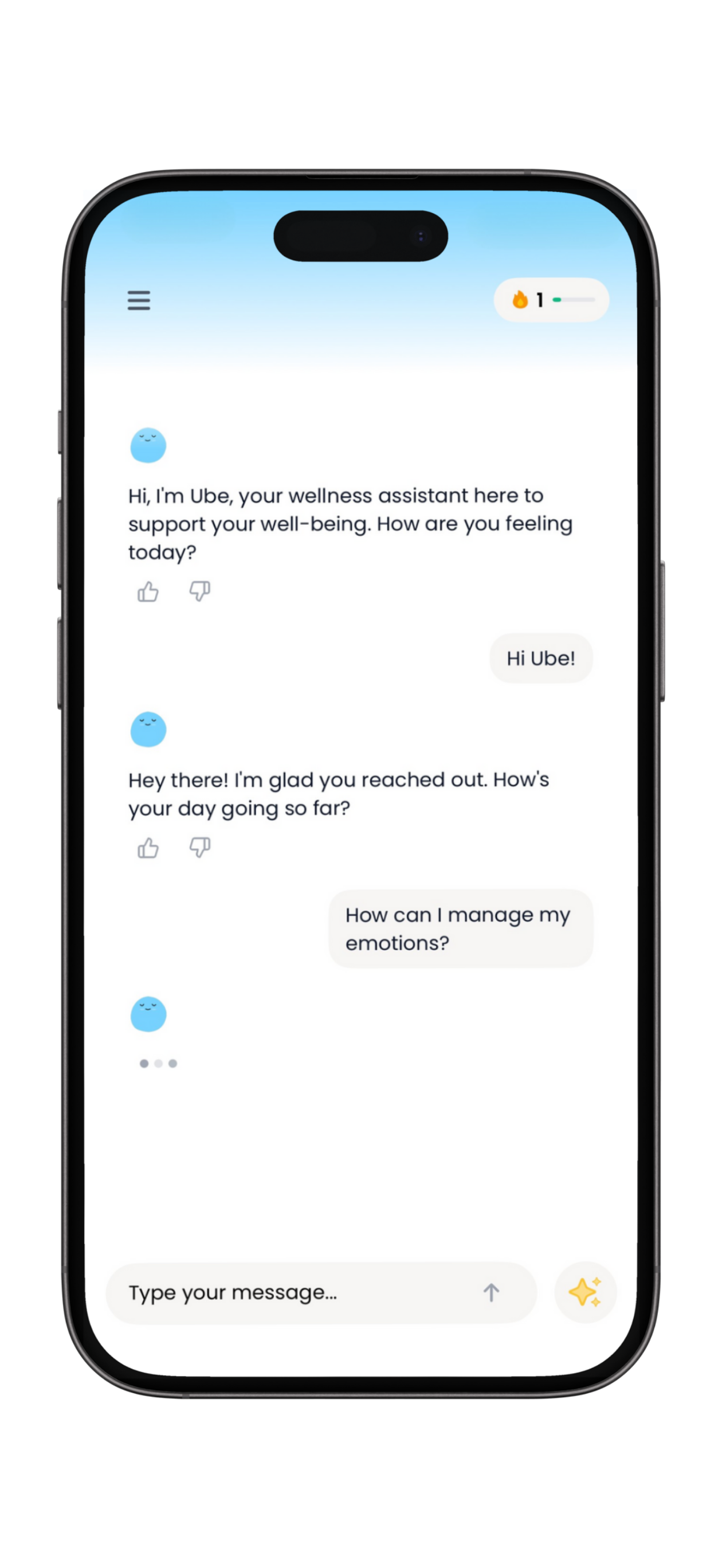
The screenshot above shows how Ube approaches this balance. The interface feels warm, not clinical. You chat with an AI companion that remembers your context, suggests exercises when you need them, and celebrates your wins, no matter how small.
Start your mental wellness journey today
Join thousands using Ube to manage stress, improve focus, and build lasting healthy habits.
Traditional mental health resources often miss the mark for people aged 18 to 35. This demographic grew up with:
Mobile-first experiences
Gamified learning platforms
Social media and instant feedback loops
A different relationship with mental health conversations
A static meditation app with a generic voice telling you to "focus on your breath" doesn't cut it anymore. Young adults want personalization, they want to feel understood, and they want something that fits into their already chaotic lives.
The concept of a Duolingo for anxiety resonates precisely because it meets users where they are. Quick sessions. Daily check-ins. A sense of progress that compounds over time.
Ube's breathing and meditation exercises are designed with this philosophy. Box breathing, coherence breathing, and guided meditations are all accessible in under 5 minutes. You can complete an exercise between meetings, on your commute, or before bed.
How Ube brings the Duolingo model to mental wellness
So how does Ube actually function as a Duolingo for anxiety? Here's what makes it different:
Daily streaks that build consistency
Just like keeping your Duolingo streak alive, Ube tracks your daily engagement. Send a message, complete an exercise, and your streak grows. Miss a day and you start over. It sounds simple, but this mechanic creates accountability without external pressure.
XP and levels that reward progress
Every interaction in Ube earns you experience points. Complete a meditation? XP. Have a meaningful conversation with the AI? XP. Reach a new level and you unlock badges. It's not about competition, it's about seeing your own growth visualized.
An AI companion that actually listens
Unlike scripted chatbots, Ube's AI remembers your conversations. It knows if you mentioned work stress last week or if you've been struggling with sleep. This contextual awareness makes each interaction feel personal rather than robotic.
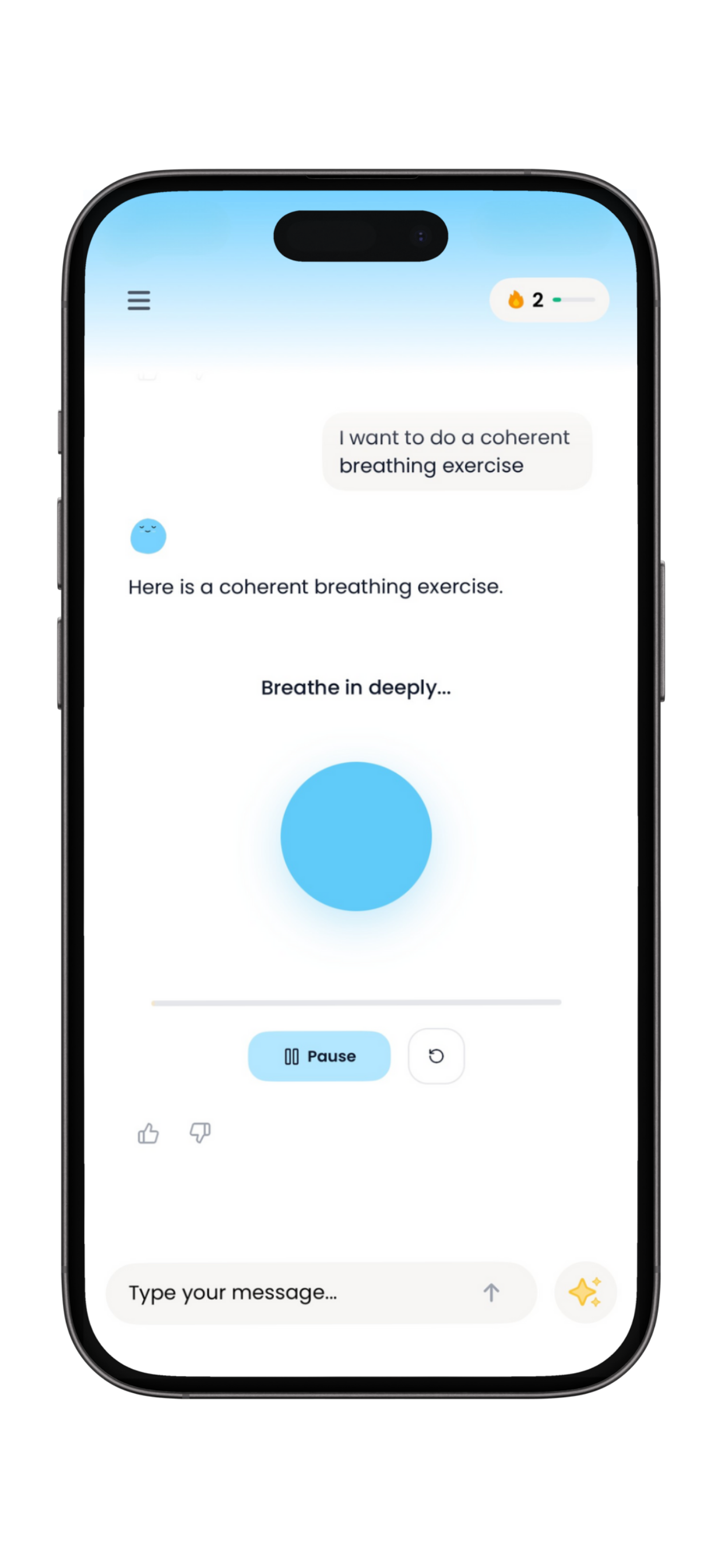
The meditation features shown above integrate seamlessly with the chat experience. The AI might suggest a specific breathing exercise based on what you've shared, creating a personalized pathway through your anxiety.
Scientifically-backed exercises
Ube doesn't invent new techniques. It packages proven methods, box breathing, coherence breathing, body scan meditation, in an accessible format. The National Institute of Mental Health recommends many of these practices as complementary approaches to managing anxiety.
The difference between gamification and trivializing
One valid concern about a Duolingo for anxiety concept is whether it trivializes real mental health struggles. Does turning anxiety management into a game with points and streaks minimize the genuine pain people experience?
The answer lies in intention. Gamification works when it serves the user, not when it exploits them. Ube doesn't push notifications to guilt you into opening the app. It doesn't create artificial urgency or FOMO. The game mechanics exist to support habit formation, not to maximize engagement metrics.
There's a meaningful difference between:
"You lost your streak! Come back now!" (manipulation)
"You've been consistent for 5 days. That's real progress." (encouragement)
Ube takes the second approach. The goal isn't to make you addicted to the app. It's to help you build skills that eventually make you need the app less.
What a typical day with Ube looks like
Imagine this: you wake up feeling that familiar tightness in your chest. Instead of reaching for social media and spiraling through negative news, you open Ube.
Morning check-in: The AI asks how you're feeling. You type a few words about the anxiety. It responds with empathy and suggests a 3-minute coherence breathing exercise.
Midday break: Work is stressful. You remember your streak and take 2 minutes for box breathing. The app rewards you with XP.
Evening wind-down: Before bed, you chat with Ube about what went well today. The AI helps you reframe a negative experience. You feel lighter.
Daily streak: Day 6 complete. Tomorrow you hit a week. That small win matters more than you'd expect.
This is what a Duolingo for anxiety experience actually looks like. Not a miracle cure, but a consistent presence that gently pushes you toward better habits.
The science of small wins
Why do streaks and XP work? Because they create small wins. Research by Harvard professor Teresa Amabile shows that progress, even minor progress, is the single most important factor in boosting motivation and emotional wellbeing during a workday.
When you're anxious, big goals feel impossible. "Manage my anxiety" is overwhelming. But "complete a 2-minute breathing exercise"? That's doable. And when you do it, the dopamine hit from earning XP reinforces the behavior.
Over weeks and months, these small wins compound. You go from "I'll try this app" to "I've built a daily mindfulness practice." That shift happens not through willpower, but through clever design.
Who is Ube for?
Ube was designed primarily for young adults aged 18 to 35 who experience:
General anxiety and stress
Difficulty sleeping due to racing thoughts
Overwhelm from work, relationships, or life transitions
A desire to build mental wellness habits but struggle with consistency
It's not a replacement for professional therapy. If you're experiencing severe anxiety, depression, or other mental health conditions, Ube works best as a complement to professional care, not a substitute.
But for the millions of people who don't need (or can't access) traditional therapy, a Duolingo for anxiety approach offers a practical alternative. It's accessible, affordable, and designed to fit into busy lives.
The future of mental health apps
The success of Duolingo proved that habit-forming design can make learning feel effortless. The same principles are now reshaping how we approach mental wellness.
Ube is part of this wave, but it distinguishes itself by keeping the human element central. The AI isn't there to replace connection, it's there to provide it when you need it most.
Getting started with Ube
If you've read this far, you're probably curious whether a Duolingo for anxiety approach would work for you. The honest answer is: it depends on your willingness to show up consistently.
The app won't fix your anxiety overnight. No app can. But if you're looking for a gentle, gamified way to build daily mental wellness habits, Ube offers a refreshing alternative to clinical therapy apps and passive meditation guides.
Available on iOS and Android, Ube combines AI-powered conversations with breathing exercises and meditation to help you manage stress and anxiety at your own pace.
FAQ
What exactly is a Duolingo for anxiety?
A Duolingo for anxiety refers to a mental health app that uses gamification elements like streaks, XP, and levels to make anxiety management feel engaging and habit-forming, similar to how Duolingo makes language learning addictive.
Is Ube free to use?
Ube offers a free tier with daily message limits. Premium subscriptions unlock unlimited conversations and additional features.
Can gamified apps really help with anxiety?
Yes. Research shows that gamification can increase engagement and adherence to mental health interventions. The key is using game mechanics that support genuine progress, not manipulate users.
Does Ube replace therapy?
No. Ube is designed as a daily companion for managing everyday stress and anxiety. For severe mental health conditions, professional therapy remains essential.
How is Ube different from other meditation apps?
Unlike passive meditation apps, Ube offers an AI companion that adapts to your context, remembers previous conversations, and suggests exercises based on your specific needs. The gamification layer adds motivation through streaks and rewards.
What exercises does Ube offer?
Ube includes box breathing, coherence breathing, body scan meditation, ambient sound scenes, and guided meditations, all accessible in under 5 minutes.