If anxiety in the morning before work hits before your feet are even on the floor, the whole day can start to feel hostile. Maybe your chest is tight, your thoughts jump straight to deadlines, or you feel a heavy sense of dread without one obvious cause. Morning anxiety is not a character flaw. It is often a nervous system response to anticipation, poor recovery, or a work situation your body has started to associate with threat.
This matters because people often blame themselves too quickly. They assume they are weak, lazy, or bad at coping, when the more accurate explanation is usually a mix of biology, habit, and context. This article looks at why mornings are often the sharpest part of the day, how to tell everyday stress from something more persistent, and what can actually help before you leave home. We will also look at when the demands waiting for you are the real problem.
Why anxiety can spike before work?
Part of this is biological. In the first hour after waking, cortisol naturally rises to help the body become alert. For someone already under strain, that normal rise can feel like a surge of danger energy instead of useful activation. Public guidance on anxiety disorders and symptoms explains how anxiety can show up as physical arousal, not just mental worry.
The other part is anticipation. Before work, your brain starts running a fast risk scan: What did I forget? Who might be upset? Can I handle today? This is anticipatory anxiety, and it attaches easily to uncertainty, unfinished tasks, conflict, or performance pressure. The mind treats possibility as probability, which is why a vague fear can feel so convincing at 7 a.m.
If your job has become linked with criticism, overload, isolation, or lack of control, mornings may also trigger a learned stress response. You do not have to hate your work for this to happen. Sometimes your body has simply learned the pattern: wake up, brace, get through it.
When morning anxiety is more than ordinary stress?
A little activation before work is common. What matters is the pattern. If it happens most mornings, fades on weekends, or eases only when you call in sick, that suggests the routine itself is activating you. If it spills into evenings, sleep, appetite, or concentration, the issue may be broader than work alone.
Anxiety in the morning before work can look surprisingly physical. People often notice before they identify the feeling as anxiety. Guidance on also notes patterns like fatigue, irritability, and trouble sleeping.
Start your mental wellness journey today
Join thousands using Ube to manage stress, improve focus, and build lasting healthy habits.
It is worth taking seriously if you are starting to avoid meetings, miss shifts, rely on alcohol at night, or move through the week in a cycle of dread and relief. Those signs do not mean you are failing. They usually mean your current load may be exceeding your recovery.
What helps in the first 15 minutes?
The goal is not to argue with anxiety while your body is still in alarm. Lower arousal first, then deal with thoughts. If you want extra ideas, these instant ways to reduce anxiety in the moment can fit naturally into your morning. The key is small, repeatable actions that tell your system, I am here, I am safe enough, I can take one step at a time.
Sit up slowly and put both feet on the floor. Name five neutral things you can see. This creates orientation, which interrupts the feeling of waking straight into threat.
Exhale longer than you inhale for one or two minutes. A simple 4 in, 6 out rhythm can reduce fight-or-flight intensity without demanding perfect technique.
Delay the mental avalanche. Do not check messages immediately. Give yourself a short buffer before news, email, or chat notifications start feeding catastrophic forecasting.
Use one anchoring sentence, such as: "I only need to do the next thing." This works better than forcing positive thinking you do not believe.
If your anxiety tends to peak in the bathroom, kitchen, or commute, attach one calming action to that place. Stretch while the kettle boils. Relax your shoulders at the front door. Unclench your jaw at the first red light. Context-based habits are usually easier to keep than abstract promises to be calm.
The night before matters more than most people think
Morning anxiety often starts the previous evening. Poor sleep, alcohol, late-night scrolling, and going to bed in a state of mental overdrive all make the next morning louder. Guidance on healthy sleep habits consistently shows that regular sleep and wind-down time support emotional regulation, not just energy. Your morning state is often borrowed from the night before.
You do not need a perfect evening routine. What helps most is reducing decision load. Lay out clothes, pack what you need, write tomorrow's first task, and choose a realistic wake time. If evenings feel chaotic, this guide to a bedtime wind-down routine that sticks offers practical ways to make nights less activating. Less friction in the morning means less room for panic to fill the gap.
Also notice what you do when dread shows up at 9 p.m. If you start mentally rehearsing tomorrow, gently postpone it. Tell yourself, "Planning happens on paper, not in my head." A two-minute brain dump can stop bedtime rumination from following you into sleep.
When the real issue is the job?
Not every case of anxiety in the morning before work is about coping skills. Sometimes it is a reasonable reaction to an unreasonable situation. Chronic understaffing, unclear expectations, hostile management, ethical stress, and nonstop digital availability all raise work-related anxiety. Global guidance on mental health at work makes clear that working conditions shape mental health in powerful ways.
If that sounds familiar, ask a more useful question than, why am I like this? Try: What exactly am I bracing for? Often the answer is concrete, such as one person, one task, or one time of day. Once you identify the trigger, you can respond with boundaries, preparation, or support, instead of treating the whole morning like a mystery.
Support may mean speaking with a manager you trust, adjusting your start-up routine, using sick leave when needed, or talking with a licensed therapist. If mornings feel unmanageable or panic is frequent, consider finding professional help. Sometimes the healthiest response is not to adapt faster, but to change the conditions that keep overwhelming you.
A steadier start is possible
Morning dread can make life feel smaller than it is. But anxiety before work is usually not random. It tends to reflect a mix of body-based activation, learned stress patterns, sleep disruption, and the meaning your brain has attached to the day ahead. When you respond with grounding, slower breathing, less morning input, and better evening preparation, you give your system a fairer starting point.
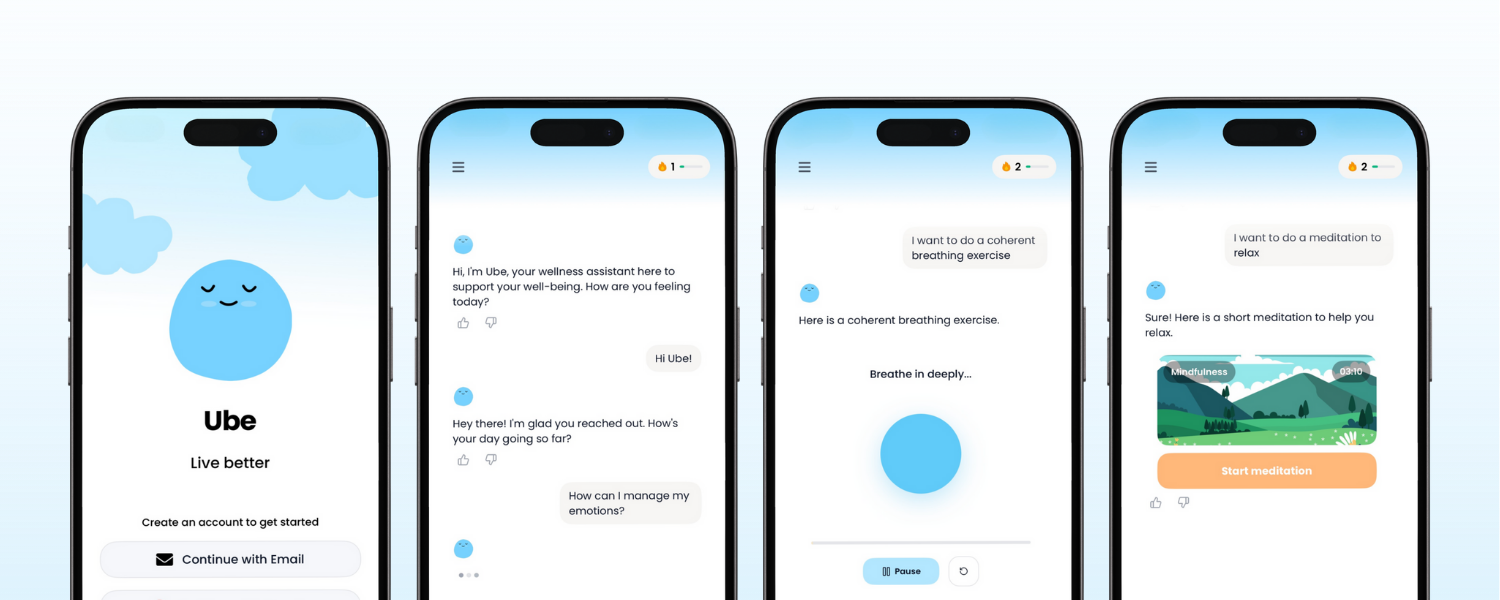
If those steps help only a little, that still matters. Small reductions in intensity create room for clearer choices about your workload, your boundaries, and whether your work environment is sustainable. You do not need to win the whole day at 7 a.m. If you want gentle extra support between hard mornings, you could try Ube, an iOS and Android AI mental health chatbot with breathing, coherence, and meditation exercises for stress and anxiety.
FAQ
Why do I get anxiety in the morning before work even when my job is fine?
Morning anxiety can come from anticipatory thinking, poor sleep, or a sensitized nervous system, even without a toxic job. Your body may be reacting to pressure, not actual danger.
Is anxiety in the morning before work a sign of burnout?
It can be, especially if the dread is persistent and work feels emotionally flat or overwhelming. Burnout is more likely when anxiety comes with exhaustion, cynicism, and reduced effectiveness.
What should I do first when anxiety in the morning before work hits?
Lower physical arousal before you problem-solve. Sit up, orient to the room, breathe out longer than you breathe in, and wait a few minutes before checking messages.
Can lack of sleep make morning work anxiety worse?
Yes. Short or broken sleep raises emotional reactivity and makes normal morning activation feel stronger. Even modest sleep improvements can reduce next-day dread.